
The Beginnings of Temu Company
Trace the roots of Temu Company, from its early inception to becoming a powerhouse in online shopping.
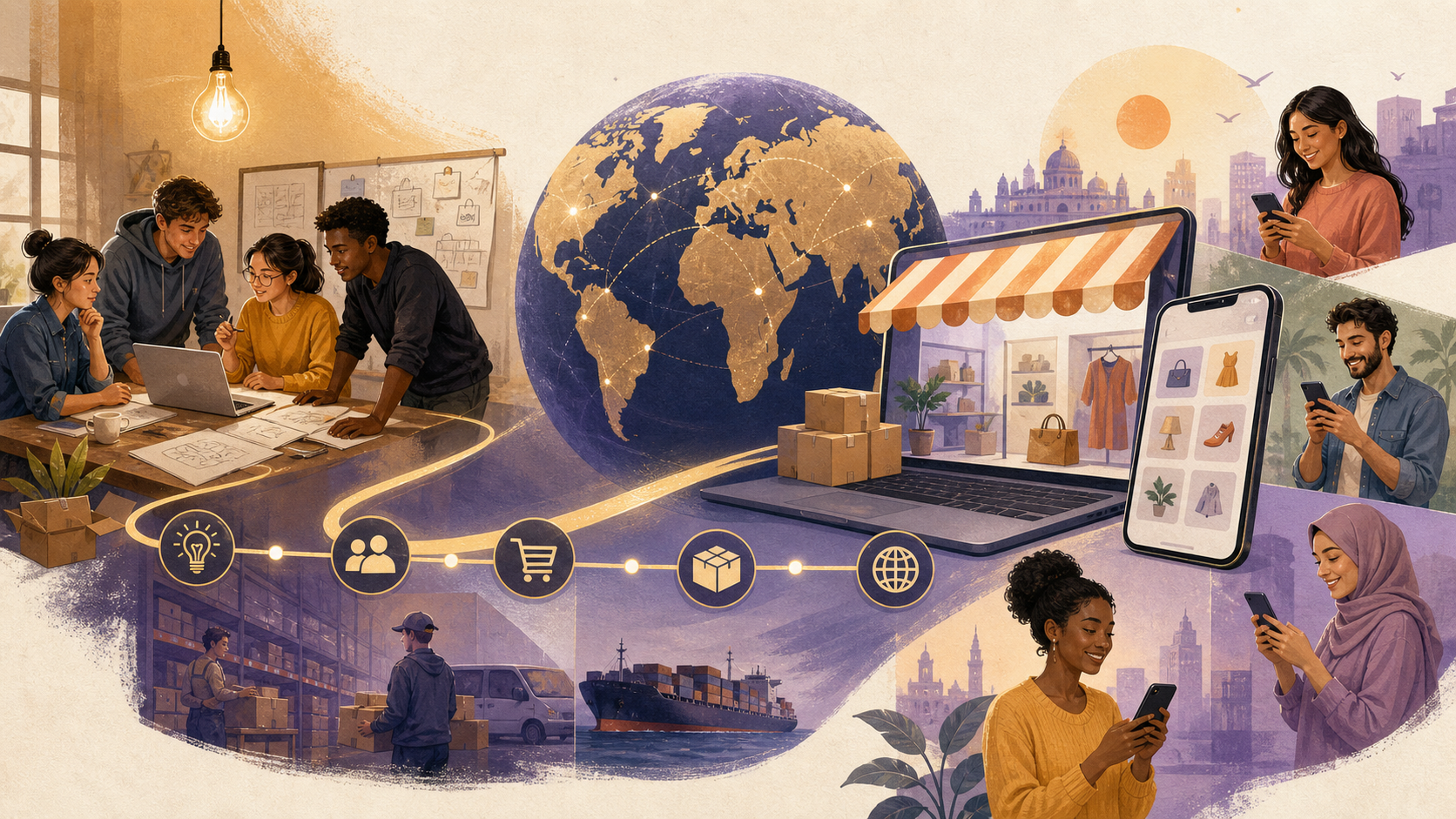
Temu appeared on the international shopping scene as a new marketplace with an ambitious proposition: connect consumers with a large network of merchants, manufacturers, and brands while keeping the shopping experience simple and price-conscious. Understanding where Temu came from helps explain both its rapid visibility and the questions shoppers often ask about ownership, products, and delivery.
The company story is best understood as the meeting point between a global consumer app and the wider commerce ecosystem of PDD Holdings. Temu is not a traditional chain of local stores. It is a digital marketplace whose selection, seller relationships, logistics partners, and customer policies all shape what a shopper sees on the screen.
FushiLu is an independent guide. Platform features, delivery promises, prices, and policies can vary by country and change over time, so confirm the final details on the official service before you buy.
Where Temu came from
PDD Holdings’ public filings describe the Temu platform as launching in September 2022 as a global online marketplace connecting consumers with sellers, manufacturers, and brands. Temu’s own company information describes the business as founded in Boston, Massachusetts, and presents the platform as a way to bring a broad selection of products to shoppers around the world.
That origin matters because Temu was designed for cross-border commerce from the beginning. Its public identity is international, while the supply side can include merchants and manufacturers operating in different countries. The result is a marketplace that can offer variety without requiring every seller to build a separate retail network in every market.
From a new platform to a global marketplace
Temu expanded beyond its initial North American launch into additional regions, including Oceania and Europe. The exact catalog, payment options, delivery estimates, and consumer protections are localized, but the central model remains recognizable: a mobile and web storefront, a large number of product listings, and a purchasing flow designed to reduce friction for the buyer.
Growth on this scale is not only a marketing story. It requires seller onboarding, product information systems, payment processing, fraud prevention, customer support, and logistics coordination. When a shopper compares two listings, those behind-the-scenes systems influence the price, delivery estimate, review signals, and the way a problem is resolved.
How the marketplace model shapes prices and products
Temu’s public materials emphasize its connections between consumers and merchandise partners, manufacturers, and brands. In practice, a marketplace model means that many products are offered by third-party merchants rather than manufactured by Temu itself. The platform provides the digital storefront and commercial tools; sellers remain responsible for their listings and for meeting the applicable rules.
PDD Holdings also describes a consumer-to-manufacturer, or C2M, orientation and a network of logistics and fulfillment partners. These ideas help explain why the platform can surface factory-linked products and experimental designs quickly. They do not guarantee that every low-priced item will be identical in quality, so the sensible habit is to evaluate each product page on its own merits.
What the origin story means for shoppers
The founding story gives useful context, but it should not replace ordinary shopping checks. Read the description, dimensions, materials, ratings, photo reviews, delivery window, and return conditions for the exact listing. A platform can be large and innovative while individual products still differ substantially because they come from different sellers and supply chains.
It is also useful to separate Temu the consumer-facing marketplace from PDD Holdings the listed parent company. The marketplace is where shoppers browse and order. PDD Holdings is the corporate group whose investor materials and filings discuss the broader business. Keeping those two levels distinct prevents common mistakes when researching the company or looking for financial information.
A practical checklist
- Check the seller, product specifications, and recent reviews rather than judging only by the headline price.
- Compare the promised delivery window with your real deadline.
- Save the order details and support route after checkout.
- Use official Temu and PDD Holdings pages when verifying company information.
- Treat the marketplace origin story as context, not as a guarantee of any particular product.
Frequently asked questions
When was Temu launched?
PDD Holdings’ public filings say the Temu platform launched in September 2022. Temu’s public company information describes the business as founded in Boston, Massachusetts.
Is Temu the same thing as PDD Holdings?
No. Temu is a consumer-facing marketplace. PDD Holdings is the broader commerce group that owns and operates a portfolio of businesses and discusses Temu in its investor materials.
Does Temu manufacture every product it sells?
No. Temu operates as a marketplace connecting shoppers with merchants, manufacturers, and brands. Product responsibility and quality can therefore vary by listing and seller.
Sources and further reading
This article is informational and is not affiliated with or endorsed by Temu or the companies mentioned.